
How to Wear Baggy Jeans Without Looking Sloppy in 2026
Baggy jeans are the dominant denim silhouette right now, but the line between intentionally oversized and accidentally shapeless is thin. Here is how to stay on the right side.
Reader-supported: we may earn a commission from links in this article, at no cost to you. As an Amazon Associate we earn from qualifying purchases. How we make money.
The skinny jean era is done. Not dying — done. The dominant denim silhouette in 2026 is wide, relaxed, and decisively baggy. But here is the thing nobody wants to say out loud: most people wearing baggy jeans right now are not wearing them well. They bought a pair two sizes too big, left the house, and hoped for the best. That is not styling. That is giving up.
Baggy jeans done right look intentional. They look like you chose the volume and then built a fit around it. Baggy jeans done wrong look like you lost weight rapidly and have not been shopping. The difference is not subtle, and it is not about spending more money. It is about understanding proportion, fit points, and the relationship between your top half and your bottom half.
Why Baggy Jeans Are Hard to Wear Well
The fundamental challenge with baggy jeans is that they add visual weight and volume to your lower half. With slim or straight-leg denim, the silhouette is closer to your actual body shape, which means the proportions are relatively forgiving. With baggy jeans, you are creating a new silhouette that may have very little relationship to your actual proportions, and that new silhouette needs to work on its own terms.
This is why the standard advice of "just size up" is incomplete and often bad. A pair of jeans that is simply too large will have the waistband in the wrong place, the rise will be off, the knee will break at the wrong point, and the overall drape will be shapeless rather than structured. An intentionally baggy jean is designed with the extra volume factored into the pattern. There is a difference, and it matters.
The Three Fit Points That Matter
Even in the baggiest jeans, three points of fit determine whether the overall look reads as intentional or accidental:
1. The Waist
This is non-negotiable. Your baggy jeans need to fit at the waist. Not tight — you should be able to breathe and sit comfortably — but they need to sit where they are supposed to sit without a belt doing structural work. A belt should be aesthetic, not engineering. If your jeans fall down without a belt, they are too big at the waist, and no amount of styling will fix the resulting silhouette.
The waistband position also determines the rise, which affects how the fabric drapes over your hips and thighs. A high-rise baggy jean creates a different silhouette than a mid-rise baggy jean, and both are valid, but you need to choose one and commit.
2. The Seat
The seat — the area across the back from waistband to upper thigh — is where baggy jeans most often go wrong. Too much fabric here creates a droopy, diaper-like effect that no amount of top-half styling can counteract. The seat should have room without having excess. You want ease of movement, not a fabric hammock.
3. The Hem
How your baggy jeans interact with your shoes is the finishing detail that ties the whole silhouette together. There are three main hem approaches:
- Stacking: The jeans are long enough to bunch and fold at the ankle. This is the most common approach with baggy denim and works well with chunky sneakers and boots.
- Clean break: The jeans just touch the top of the shoe with minimal excess. Harder to achieve with very wide legs but creates a cleaner, more intentional look.
- Cropped or cuffed: Showing ankle above the shoe. This works with wider legs to prevent the silhouette from looking too heavy at the bottom.
The Proportion Game: Top Half Strategies
Once your jeans fit correctly, the rest of the outfit needs to account for the volume you are working with on the bottom. This is where proportion becomes the entire game.
Strategy 1: Fitted Top, Volume Bottom
The most reliable approach. A fitted or semi-fitted top — a crewneck tee, a slim hoodie, a tucked button-down — creates contrast with the volume below. Your torso reads defined, your legs read relaxed, and the overall silhouette has a clear top-to-bottom logic.
This is particularly effective with graphic tees. A well-fitting graphic tee in the right size creates a visual anchor that makes the baggy bottom half read as a deliberate choice. The graphic draws the eye up, the jeans provide the volume below, and the contrast between the two halves is what makes the fit work.
Recommended: Carhartt WIP Pocket Tee — heavyweight cotton, boxy but not oversized, sits perfectly above a high-waisted baggy jean.
Strategy 2: Oversized Top, Volume Bottom
This is the harder approach and the one that goes wrong most often. If your top is oversized and your bottom is baggy, you need something — a cinched waist, a visible belt, a jacket that defines the shoulder line — to create at least one point of definition. Without it, you are a rectangle, and rectangles are not a silhouette.
The trick is layering. An oversized tee under an open overshirt or jacket that has some structure can give the top half enough shape to balance the bottom. A visible waistband — whether from the jeans themselves or a belt — creates a dividing line that prevents the entire outfit from reading as a single undifferentiated mass.
Strategy 3: Tucked In
Tucking your top into baggy jeans is the move that most clearly communicates intentionality. It says: I chose this waistline, I chose this volume distribution, this is on purpose. A full tuck works with higher-rise baggy jeans. A front tuck — tucking just the front center of the shirt — works with mid-rise and creates a more casual effect.
This approach pairs well with the workwear crossover aesthetic, where tucked work shirts and visible belts are part of the visual language.
Footwear: The Make-or-Break Decision
Your shoe choice with baggy jeans matters more than your shoe choice with any other denim silhouette. The shoe is the visual base of the outfit, and with baggy jeans, the relationship between fabric volume and shoe size determines whether the bottom half of your fit looks grounded or floating.
Chunky Sneakers
The easiest pairing. Chunky sneakers — New Balance 550s, Nike Vomeros, Salomon XT-6s — have enough visual mass to anchor wide-leg denim. The shoe acts as a counterweight to the fabric volume, and the proportions balance naturally. This is the default pairing for a reason: it works reliably.
For recommendations under budget, check our best sneakers under $100 roundup.
Low-Profile Sneakers
This is where it gets interesting. A slim, low-profile sneaker under baggy jeans creates a contrast that can look either very intentional or very off. The keys are hem length and ankle visibility.
With low-profile shoes like Adidas Sambas or Onitsuka Tigers, you want the jeans to either stack dramatically (creating an intentional puddle of fabric at the ankle) or be cropped/cuffed enough that there is a visible gap of ankle between the hem and the shoe. The worst version is when baggy jeans hit a low-profile sneaker at exactly the wrong length, partially covering the shoe in a way that looks like you did not account for the shoe height.
Boots
Boots under baggy jeans is a classic combination that predates the current trend by decades. Work boots, Chelsea boots, and combat boots all have enough height and structure to interact well with wide-leg denim. The jeans can stack on top of the boot, be tucked into higher boots, or sit just above the ankle.
Denim Wash and Treatment
The wash of your baggy jeans affects how the volume reads visually. This is an underappreciated factor that makes a significant difference.
Dark Wash / Raw
Dark denim slims the silhouette even in a baggy cut. If you want the comfort and movement of baggy jeans without maximum visual volume, a dark wash or raw denim is the move. The fabric reads as heavier and more structured, and the dark color minimizes the visual impact of wrinkles and fabric bunching.
Medium Wash
The standard. Medium wash is the most versatile and the most common for a reason. It reads casual without being sloppy, shows denim texture and character nicely, and works with essentially any color palette.
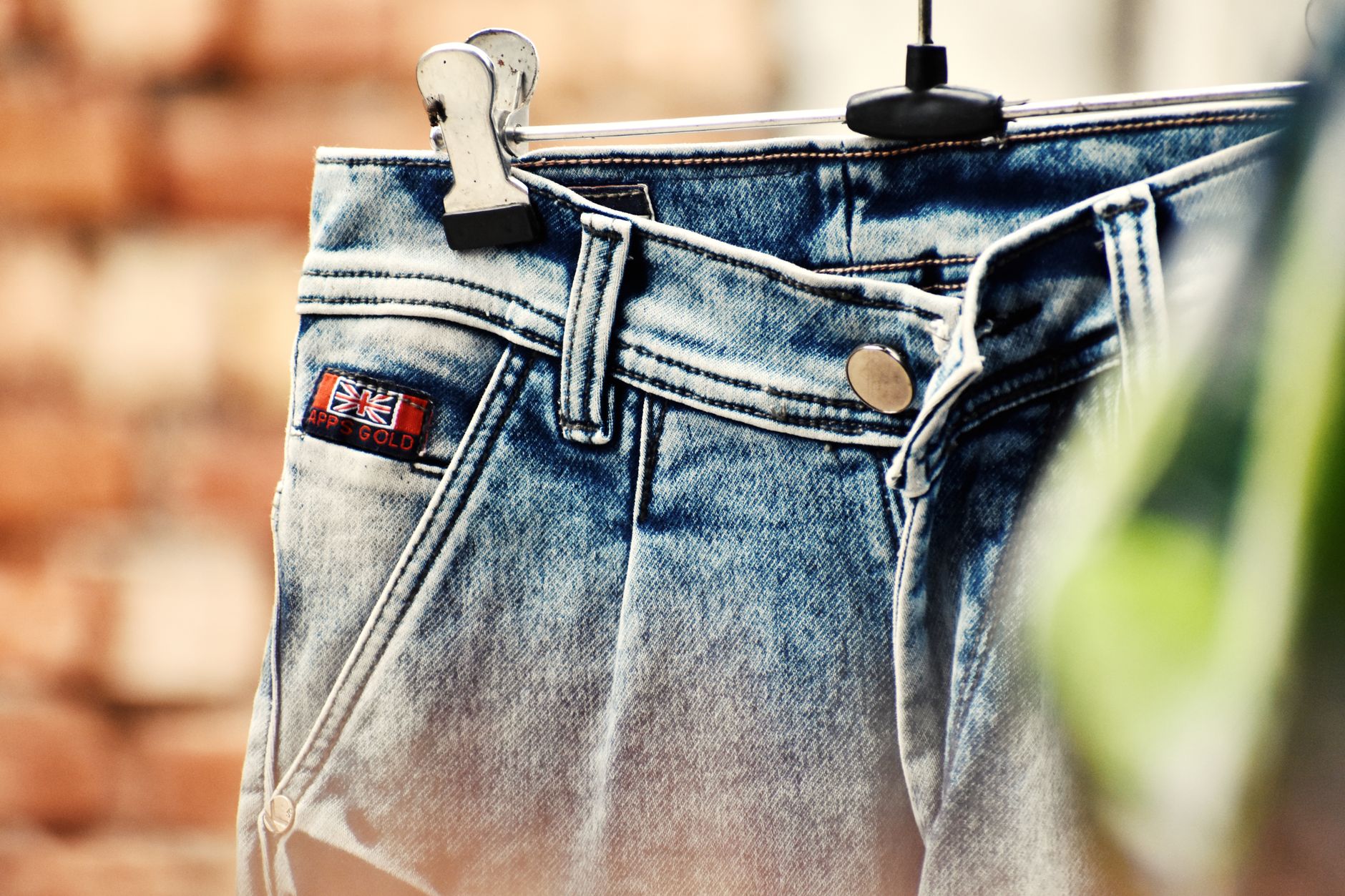
Light Wash / Bleached
Maximum visual volume. Light-wash baggy jeans are the most visually impactful version of the trend and the hardest to pull off. Every wrinkle, fold, and stacking point is visible, which means the fit and drape need to be right. Light wash also tends to read more casual and more summery, which limits the styling contexts.
Common Mistakes
Here are the specific things that make baggy jeans look sloppy rather than styled:
Jeans that are simply too big rather than intentionally baggy. Already covered this, but it bears repeating. Sizing up in a regular-cut jean is not the same as buying a properly designed wide-leg or baggy-cut jean. The pattern, rise, and construction are different.
No waist definition at all. If nobody can tell where your torso ends and your legs begin, the outfit has no structure. Something needs to mark the waistline — a tuck, a belt, a contrast between fitted top and baggy bottom.
Wrong hem length for the shoe. The hem-to-shoe relationship is the detail that makes or breaks the look. Pay attention to it. If necessary, get the jeans hemmed to the right length for the shoes you plan to wear them with.
Too many other baggy elements. Baggy jeans plus an oversized hoodie plus a huge puffer jacket plus chunky sneakers equals a fit that has no shape at all. You need at least one element that provides definition or structure. Consider the advice in our outfit formulas guide for reliable proportion templates.
Fighting the silhouette. If you put on baggy jeans and spend the whole time pulling at them, adjusting them, and looking uncomfortable, the outfit will communicate that discomfort regardless of how the individual pieces look. Wear what you are comfortable in. If baggy jeans do not feel right to you, straight-leg or relaxed-fit denim can achieve a similar contemporary look with less volume to manage.
Specific Outfit Templates That Work
Template 1: The Clean Standard
- White or off-white fitted tee
- Medium-wash baggy jeans with clean hem
- White sneakers (our top picks)
- No visible accessories below the neck
Template 2: The Layered Build
- Fitted long-sleeve base layer
- Open overshirt or work jacket (think Dickies 874 territory)
- Dark-wash baggy jeans with slight stack
- Chunky sneakers or boots
- One hat or cap
Template 3: The Warm Weather Edit
- Boxy crop tank or short-sleeve camp collar shirt
- Light-wash baggy jeans, cuffed once
- Low-profile sneakers with visible ankle
- Minimal accessories
Template 4: The Going-Out Version
- Black fitted tee or slim mock neck
- Black or very dark baggy jeans
- Clean leather boots or minimal black sneakers
- One piece of jewelry that you actually care about
The Bottom Line
Baggy jeans are not going anywhere soon. The silhouette has too much momentum, too much cross-cultural support, and too much comfort advantage over slim fits to recede quickly. But the window where simply owning baggy jeans was enough to look current is closing. The trend is mature enough now that execution matters — how you wear them is more important than whether you wear them.
The good news is that the principles are not complicated. Fit the waist. Balance the volume. Choose your shoes deliberately. Define the silhouette at least one point. Do those four things and your baggy jeans will look like a choice, not an accident. Skip them and you are just wearing pants that do not fit.
That is the whole difference between style and not style, with this or any other garment: intention that is visible.
Shop this guide
Carhartt WIP Pocket Tee
Carhartt WIP
Heavyweight cotton, boxy but not oversized, sits perfectly above a high-waisted baggy jean.
BUY ON AMAZON →RELATED READS

Back-to-School Fit Check: SL 72 Anchor, Cargo Bottom & Graphic Tee
A head‑to‑toe back‑to‑school outfit built around the adidas SL 72 RS, paired with relaxed cargo pants and a standout graphic tee for 2026's Y2K campus vibe.
How to Style Wide-Leg Jeans for Men: 2026 Outfit Guide
Master wide-leg jeans men's styling with 5 proven outfit formulas, top denim picks under $150, and the proportions rule that makes every fit look intentional.

5 Streetwear Outfit Formulas That Work Every Time
Stop overthinking your fits. These 5 streetwear outfit formulas are foolproof, flexible, and work for any budget. Copy-paste style for 2026.