
Oversized Hoodie Layering Guide: How to Actually Make It Work
Layering with an oversized hoodie is either the move or a disaster depending on how you execute it. Here is the complete breakdown of proportions, combinations, and context.
Reader-supported: we may earn a commission from links in this article, at no cost to you. As an Amazon Associate we earn from qualifying purchases. How we make money.
The oversized hoodie is the single most versatile garment in the modern wardrobe — and also the most frequently misused. When it is working, it functions as the foundation of genuinely excellent outfits across every temperature range and social context. When it is not working, it looks like you are wearing a hoodie that belongs to someone significantly larger than you because you could not find your own.
The difference is not a matter of taste, it is a matter of understanding how the oversized hoodie functions as a layering piece and what each combination of layers is actually trying to do. This guide is about getting to the former state reliably rather than by accident.
The Oversized Hoodie as Foundation Garment
The most common framing of the oversized hoodie is as an outer layer — you put it on over something and then add an outer layer on top if it is cold enough. This is fine and correct as far as it goes, but it undersells what the hoodie can do.
The oversized hoodie can function as:
- A mid-layer (something under it, something over it)
- A statement outer layer (the most important piece in the outfit)
- A foundation layer that other pieces react to
Understanding which of these roles your hoodie is playing in any given outfit changes every decision you make around it.
When the hoodie is the statement outer layer, everything else should be subordinate. The bottom, the footwear, the accessories should support the hoodie rather than compete with it. When it is a mid-layer, it needs to be chosen in relationship to both the layer under it and the layer over it — in terms of color, material, and proportion. When it is a foundation, you are building from it upward, which means the pieces going over it determine the visual outcome.
Proportion: The Non-Negotiable Starting Point
Proportion is the single most important variable in oversized hoodie layering. Everything else — color, material, styling details — is secondary to getting the proportions right.
The Hoodie Itself
An oversized hoodie should have clear intention in its size. This means:
- Shoulders that drop 2-4 inches below your natural shoulder
- A body length that hits between the high hip and the mid-hip (right around where your hip bone begins to curve)
- Sleeve length that is either intentionally long (covering the heel of the hand) or at the wrist — not awkwardly in between
- Hood that is sized to actually function — not comically large, not undersized
The Champion Reverse Weave Hoodie nails these proportions consistently and its 12oz heavyweight fleece holds its shape through layering without losing the intentional oversized drape.
The specific measurements vary by your proportions, but the principle is consistent: every dimension of the hoodie should feel intentional rather than like an accident of having bought the wrong size.
The Hoodie Against Different Bottom Silhouettes
| Bottom Silhouette | Hoodie Proportion That Works | |-------------------|------------------------------| | Wide-leg trousers | Regular oversized (not cropped, not extra-long) | | Cargo pants | Slightly shorter hem to show the cargo pocket details | | Straight-leg denim | Standard oversized with hem at or above hip | | Track pants | Extra-long or cropped, depending on the taper of the track pant | | Shorts | Extra-long hoodie for the dress-over-shorts look |
The golden rule: more volume on the bottom means you can go longer on the hoodie without losing definition. Less volume on the bottom means keeping the hoodie at a length that does not create a box silhouette.
Layer One: What Goes Under the Hoodie
Layering under the hoodie is where most people think least carefully. The default is a tee or long sleeve under a hoodie, nothing visible, nothing considered. There is nothing wrong with this but you are leaving creative opportunity on the table.
The Visible Collar
Wearing a collared shirt under a hoodie is one of the cleanest layering moves available. The collar of an Oxford, a work shirt, or a technical shirt peeking above the hoodie neckline creates a visual layering element that reads as intentional and slightly elevated without requiring any complexity in the rest of the outfit.
For this to work:
- The collar should be visible 1-2 centimeters above the hoodie neckline — any more reads sloppy, less defeats the purpose
- The shirt under the hoodie should be slightly fitted so you are not adding bulk under an already voluminous piece
- Color relationship matters: a white collar under a grey or navy hoodie reads clean; a dark collar under a light hoodie can work as a deliberate contrast; matching colors reads tonal and intentional
The Long Sleeve Layer
A long sleeve tee or waffle-knit henley under a hoodie adds visible sleeve contrast when the hoodie sleeves are pushed up or the hoodie is slightly shorter than the underlayer. This is particularly effective when there is a color contrast — a cream long sleeve under a black hoodie, or a charcoal long sleeve under an olive green hoodie.
The sleeve length relationship is important: the underlayer sleeve should be slightly longer than the hoodie sleeve when worn normally, creating a visible cuff of the underlayer at the wrist. This is the opposite of trying to hide the layer under — you are featuring it as a design element.
The Graphic Tee Combination
A graphic tee under an open-zip hoodie is a classic combination that has been working for over twenty years because the underlying logic is sound: the zip hoodie frames the graphic tee, adding structure and warmth without hiding the tee's visual content. For maximum effect:
- Zip the hoodie to about mid-chest height, leaving the graphic of the tee visible in the opening
- Or wear the hoodie fully open as essentially an overshirt layer over the tee
- Keep the rest of the outfit simple — this combination works best when it is the focus
For detailed advice on styling graphic tees specifically, including as the underlayer in hoodie combinations, our guide on styling vintage band tees covers the fundamentals and our graphic tee trends guide for 2026 covers what types of graphics are working right now.
Layer Two: What Goes Over the Hoodie
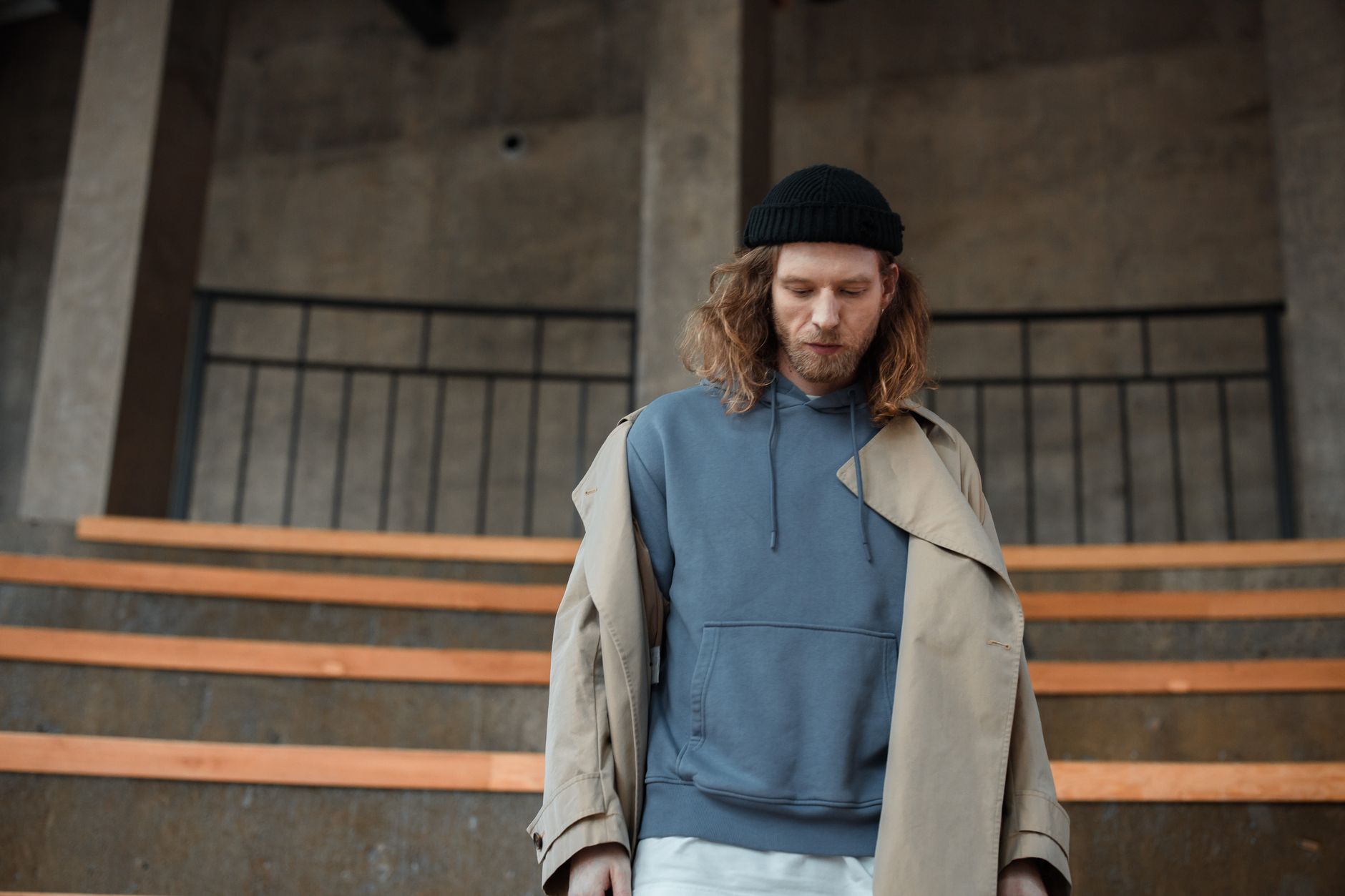
The hoodie as a mid-layer under an outer piece is where some of the most interesting and practical styling happens. This approach is both functionally smart — the hoodie adds insulation under an outer shell — and aesthetically interesting when the proportions are managed correctly.
The Hoodie Under a Bomber
The bomber jacket over a hoodie is a classic silhouette that requires attention to fit. The bomber needs to be sized so it can accommodate the hoodie underneath without pulling, straining, or creating a stuffed look. A regular-fit or slightly relaxed bomber usually works; a slim-cut bomber over an oversized hoodie almost never does.
The hem relationship is critical: ideally the hoodie hem is at or slightly longer than the bomber hem, creating a visible layer at the bottom. The hood should be worn under the bomber collar rather than over it — a hoodie sticking out of a bomber collar reads like a mistake rather than a choice.
Colorway suggestions that work consistently:
- Black bomber over grey or navy hoodie
- Olive bomber over cream or tan hoodie
- Brown leather or faux-leather bomber over black hoodie — a Carhartt Chore Coat works as the heavier outer layer here
- Camel wool bomber over charcoal hoodie
The Hoodie Under a Structured Jacket or Blazer
This is the more elevated version of the hoodie-as-mid-layer approach. A structured jacket or unstructured blazer over a hoodie creates the cross-register tension that makes "dressed up meets casual" styling interesting. The hoodie's hood hanging below the jacket collar is a visual detail that signals the deliberateness of the combination.
For this to work:
- The jacket needs to be roomier than you would buy for suiting purposes — the hoodie is adding 1-2 inches of circumference
- Preferably a jacket with a clean, unfussy silhouette that contrasts cleanly with the hoodie's casual character
- The hoodie should be in a solid color without a prominent graphic, since it is the supporting player in this combination
The Hoodie Under a Technical Shell or Overcoat
This is the most practical mid-layer application — a hoodie under a waterproof shell or heavy overcoat for actual cold weather. The styling considerations here are secondary to function, but some principles still apply:
- The hoodie's hood should be accessible — which usually means wearing it under the outer layer's collar so you can pull it up when needed without fully removing the outer layer
- Color coordination matters less than it does in fashion-forward layering, but a clean relationship between the visible elements (hood, hem) and the outer layer reads better than total indifference
- Keep the bulk under control — an extra-oversized hoodie under a fitted outer layer creates an odd silhouette
Color and Material Logic for Layered Hoodie Outfits
The Tonal Approach
Layering similar colors in different tones — a light grey hoodie over a cream long sleeve, under a charcoal jacket, with off-white cargo pants — creates a sophisticated, coordinated look without the visual noise of too many contrasting elements. This approach is forgiving because as long as you stay within a color family, the combinations are hard to get badly wrong.
For a deep dive into monochrome and tonal outfit construction, our monochrome streetwear outfit ideas guide has complete outfit frameworks built around this approach.
The Contrast Approach
Strong color contrast between layers — a bright orange hoodie under a black bomber, over a white long sleeve — reads more graphic and deliberate. This is a higher-risk, higher-reward approach. When the proportions are right and the colors actually work together, the result is visually striking. When the proportions are off or the colors are not genuinely complementary, it reads like you got dressed in the dark.
Material Contrast as a Layering Element
Beyond color, material contrast between layers adds visual dimension. Some effective material contrasts:
- Fleece hoodie under leather or faux-leather outer layer
- French terry hoodie (slightly structured fleece alternative) under an unstructured technical jacket
- Heavyweight cotton hoodie under a lightweight nylon windbreaker, where the different weights create deliberate proportion tension
The Bottom Half: How Pants Complete the Layered Hoodie Look
The bottom half of a layered hoodie outfit determines whether the overall silhouette reads "intentional" or "accidentally got dressed in layers." The core principle is volume relationship: if there is significant volume on the top half (oversized hoodie plus outer layer), the bottom half can either balance that volume or contrast it.
Volume-balanced bottoms: Wide-leg trousers or relaxed cargo pants that carry volume matching the upper half. This creates the proportional equilibrium that full-silhouette streetwear styling is built on.
Volume-contrasting bottoms: Straight-leg or slightly tapered trousers that create a clear volume decrease from the generous upper half. This silhouette reads more tailored and transitional between contexts.
The wrong approach: Slim or skinny-fit anything under a volumous layered upper. The proportion gap is too large to read as intentional rather than accidental.

Seasonal Considerations
If you are shopping for a hoodie specifically built for layering — with the right weight, drop-shoulder cut, and drape — our best hoodies for layering guide ranks the top options available right now, including heavyweight acid-wash and fleece picks tested in actual cold weather.
Winter Layering
Winter layering with an oversized hoodie centers the hoodie as the primary insulation layer under a proper outer garment. The principles are:
- Treat the hoodie as your warmth layer, not your fashion statement — that job belongs to the outer layer
- Buy hoodies intended for this use in heavier weights (12-16 oz fleece or heavy French terry)
- The visible elements (hood, sleeve cuffs, hem) should still be styled intentionally even if functionality is the priority
Spring Transition Layering
Spring is when the hoodie-as-outer-layer formula reaches its peak effectiveness. The weather requires a layer but not a heavy jacket, which puts the hoodie in its ideal operating context. The spring transition is also when oversized hoodie outfits with minimal outer layering — just a lighter overshirt or bomber rather than a heavy coat — look most natural.
For the full spring layering picture, our spring streetwear trends guide for 2026 covers how layering is being approached across the season.
Quick Reference: Hoodie Layering Formulas That Work
| Situation | Formula | |-----------|---------| | Casual everyday | Oxford collar shirt + hoodie + straight-leg denim + clean sneaker | | Elevated casual | Hoodie + unstructured blazer + wide-leg trousers + loafer | | Cold weather practical | Long sleeve + hoodie + shell jacket + cargo pants + trail runner | | Streetwear statement | Graphic tee + open-zip hoodie + cargo pants + bold sneaker | | Tonal layering | Cream tee + grey hoodie + charcoal overcoat + off-white wide-leg |
Highsnobiety's styling coverage has editorial examples of the most elevated hoodie layering approaches if you want to see these principles applied in fashion-forward context.
Shop Our Collection
Our hoodies are built for exactly this kind of layering — the right weight, the right proportions, and graphics that work as a statement or a supporting player depending on what you need. Explore the full hoodie collection at the Wear2AM shop. Free shipping on orders over $75.
Shop this guide
Champion Reverse Weave Hoodie
Champion
nails these proportions and its 12oz heavyweight fleece holds shape through layering.
BUY ON AMAZON →RELATED READS

Crew Sock Styling Rules Ranked for 2026
A ranked rulebook for when and how to showcase crew socks in 2026 — visibility thresholds, sneaker pairings, pant cuts, and two reliable multipack picks.

Get the Kayano 14 Look for $25 Less with the ASICS Gel‑1130
Get the Y2K Kayano 14 look for $25 less with the ASICS Gel‑1130 — colorway picks, fit tricks, and styling moves that close the gap.

5 Fresh Ways to Wear the Nike Cortez Instead of the Adidas Samba
Five concrete fit formulas that let the Nike Cortez stand in for the Adidas Samba, from minimalist monochrome to tailored-casual, for 2026 streetwear.