
Sneaker Heel Counters: Why the Back of the Shoe Matters
The heel counter is the most overlooked design element in sneakers. Here's how different shapes affect comfort, fit, and the entire look of your shoe from every angle.
Reader-supported: we may earn a commission from links in this article, at no cost to you. As an Amazon Associate we earn from qualifying purchases. How we make money.
The Part You Never Think About
People will spend twenty minutes deciding between two colorways and zero seconds considering the heel counter. Which is wild, because the heel counter — that structured piece at the back of the shoe wrapping your heel — affects fit, comfort, durability, and how the sneaker looks from every angle that isn't straight-on.
When someone walks past you, you see the back of their shoes more than the front. The heel counter is the first thing visible from behind, and it's one of the biggest design differentiators between sneaker models. An Air Force 1 and a Dunk use similar materials and general construction, but you can tell them apart from 50 feet away just by the heel shape.
This is the design element nobody talks about but everybody notices.
What a Heel Counter Actually Does
Structural Support
The heel counter's primary job is keeping your heel in place. Without it, your foot slides laterally inside the shoe, which creates blisters, reduces stability, and makes the shoe feel sloppy after a few wears. A proper heel counter cups your heel bone (calcaneus) and prevents the side-to-side movement that destroys both comfort and the shoe's structure over time.
Shape Retention
That crisp silhouette you see on a new sneaker? The heel counter maintains it. Without internal structure, the back of the shoe collapses within weeks of regular wear. Cheaper shoes often use thinner heel counters (or none at all), which is why they look worn out faster even if the materials elsewhere hold up.
Visual Identity
Sneaker designers use the heel counter as a canvas for branding, design accents, and model identification. Nike's heel tab placement, New Balance's "N" positioning, Adidas' heel stripe — these are all heel counter design decisions that create visual signatures identifiable at distance.
The Major Heel Counter Shapes
The Classic Cup
Examples: Nike Air Force 1, Adidas Superstar, Reebok Club C
The cup-style heel counter wraps around the entire back of the heel with a rounded, continuous curve. It's the most traditional construction and provides the most support. The curve mirrors the natural shape of your heel bone, creating a secure fit without pressure points.
On the Air Force 1, the heel counter is particularly pronounced — a thick, rigid piece that extends up to the ankle collar. This is part of why AF1s maintain their shape for years and why the chunky heel profile is so recognizable.
Visual effect: Clean, rounded, substantial. The shoe looks structured and intentional from behind.
The Tab / Pull Tab
Examples: Nike Dunk, Vans Old Skool, various retro runners
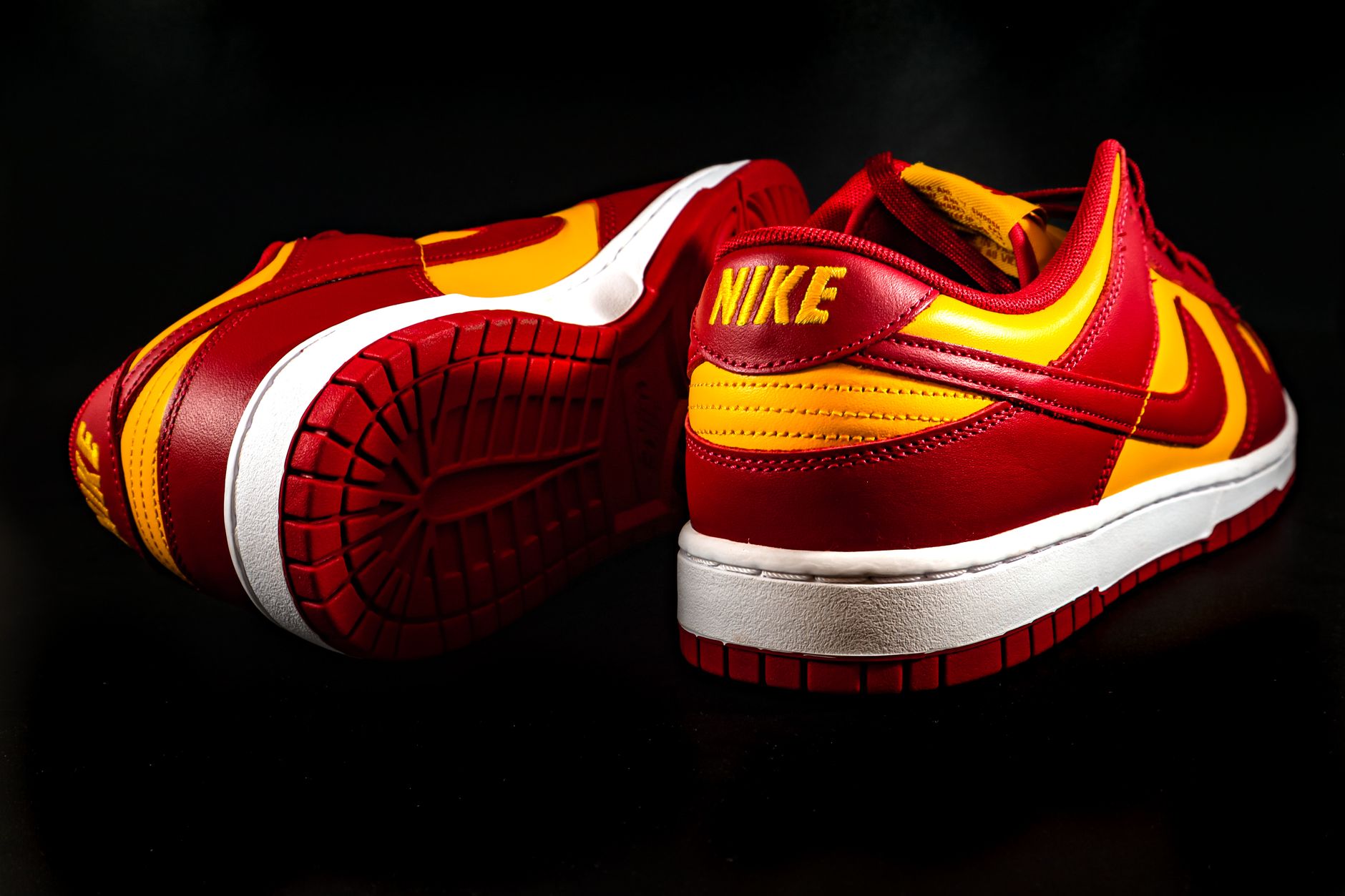
A smaller, external piece at the top of the heel that serves as both a structural element and a grip for pulling the shoe on. The tab sits on top of the heel counter rather than being the counter itself — the internal structure is still there, the tab is just the visible accent.
Nike Dunks use a subtle heel tab that's become one of the model's identifying features. It's functional (helps you get the shoe on) and aesthetic (provides a break in the visual line of the collar).
Visual effect: A punctuation mark at the back of the shoe. Adds detail without bulk.
The Extended Heel
Examples: Nike Air Max 90, Nike Air Max 97, various chunky runners
An enlarged heel counter that extends outward beyond the normal shoe silhouette. On the Air Max 90, the TPU heel clip wraps around the midsole and acts as both a structural support and a design feature. This style emerged from performance running, where the extended heel provides crash-pad protection during heel strikes.
In streetwear context, the extended heel creates a more aggressive, technical silhouette. It adds visual mass to the back of the shoe, which changes how the sneaker pairs with different pant cuts. Wide-leg pants that break over the shoe benefit from the extra visual weight at the heel.
Visual effect: Technical, aggressive, substantial. The shoe has a "presence" from behind.
The Sculpted / Architectural
Examples: New Balance 2002R, ASICS Gel-Kayano 14, Salomon XT-6
A heel counter with intentional dimensional shaping — ridges, curves, geometric facets. This style is common in the trail and performance runner category that's dominated streetwear sneaker culture recently. The sculpting serves a dual purpose: structural rigidity (shapes are stronger than flat surfaces) and visual interest.
The Salomon XT-6's heel counter is a masterclass in sculpted design. The Quicklace system integrates into a heel cup that looks engineered without looking overdesigned. It's functional beauty — which is basically the definition of good sneaker design.
Visual effect: Dynamic, modern, detailed. These shoes look designed in 3D rather than 2D.
The Minimal / Counter-less
Examples: Nike Cortez, Common Projects Achilles, various minimalist sneakers
Some sneakers deliberately minimize or eliminate the visible heel counter. The Cortez has a thin, low-profile heel that barely registers visually. Common Projects Achilles has no external counter at all — just the smooth leather upper wrapping continuously around the heel.
This approach works for minimalist aesthetics where the shoe is meant to disappear into the outfit rather than anchor it. Check our streetwear minimalism guide for styling these effectively.
Visual effect: Clean, understated, disappearing. The shoe serves the outfit rather than commanding attention.
The Exaggerated / Oversized
Examples: Balenciaga Triple S, Nike ISPA, various "fashion sneakers"
An intentionally oversized heel counter that becomes the dominant visual element of the shoe. This is a fashion-forward approach where the heel counter isn't just functional — it's the statement. These tend to be polarizing: you either appreciate the sculptural intent or think the shoe looks like it has a growth.
Visual effect: Loud, sculptural, unmissable. The shoe is the outfit.
How Heel Counter Shape Affects Fit
Rigid vs. Flexible
A rigid heel counter (Air Force 1, most leather sneakers) provides more support but requires a break-in period. Your heel might feel pressure points in the first few wears before the material conforms to your foot shape.
A flexible heel counter (mesh runners, knit sneakers) adapts immediately but provides less long-term structure. The trade-off is comfort now vs. shape retention later.
Width Implications
Wider heel counters accommodate wider heels. If you have a broad heel and experience slipping in narrow-countered shoes, look for models with wider, more enveloping heel construction. New Balance tends to offer wider heel counters than Nike across similar categories.
Break-In Tips for Stiff Heel Counters
- Wear thick socks for the first 3-4 wears
- Flex the heel counter gently by hand before wearing — work the material back and forth
- Use a heel pad insert to prevent blisters during break-in
- Don't tie too tightly initially — give the heel room to move slightly while the counter shapes
How to Evaluate Heel Counter Quality
The Squeeze Test
Squeeze the heel counter between your thumb and forefinger. A quality counter will resist with firm, even pressure. A poor one will crumple easily or have soft spots. If you can flatten the heel counter with light pressure, the shoe will lose its shape within months.
The Bend Test
Push the back of the shoe forward from the heel. A well-constructed heel counter will flex slightly and spring back to shape. A cheap one will deform and stay deformed. This test tells you more about shoe quality than looking at materials, stitching, or brand name.
Material Indicators
Thermoplastic (TPU) heel counter: The standard in most athletic-adjacent sneakers. Rigid, lightweight, and resistant to deformation. Can be molded into complex shapes.
Internal cardboard counter: Found in cheaper sneakers. Works initially but breaks down with moisture and repeated wear. If you can feel a thin, slightly flexible material inside the heel lining, it's probably cardboard.
Leather heel counter: The premium option. Found in quality leather sneakers and boots. Molds to your foot shape over time and lasts years.
No counter (structured upper only): Some minimalist shoes rely on the upper material alone. Acceptable for lightweight shoes but won't maintain structure under heavy use.
Heel Counters Across Iconic Sneaker Families
Nike
Nike uses heel counters as major model differentiators:
- Air Force 1: Tall, rigid, cup-style. The bulkiest heel in Nike's lineup.
- Air Max 1: Visible Air unit acts as part of the heel structure. Moderate height.
- Dunk: Low-profile tab with internal counter. Clean, simple.
- Cortez: Minimal external counter. The heel is almost flat.
- Air Jordan 1: Mid-height collar with internal counter. The swoosh evolution is visible at the heel angle.
Adidas
- Superstar: The shell toe cap gets all the attention, but the heel counter is equally distinctive — a smooth, rounded cup with the trefoil logo.
- Samba: Low-profile heel with the iconic three stripes visible from behind.
- Ultraboost: Technical heel counter with a rigid TPU clip that locks the heel into the Boost midsole.
- Forum: Exaggerated high-top heel with ankle strap integration.
New Balance
- 990 series: A substantial, structured heel counter that's part of why these shoes are so comfortable for all-day wear.
- 550: Basketball-derived heel with moderate cup and the "N" logo prominently placed.
- 2002R: Sculpted, dimensional heel counter with visible layering.
Why This Matters for Styling
The heel counter shape affects how your sneakers interact with your pants — which is the most visible relationship in any fit from the knee down.
With Slim/Tapered Pants
Slim pants expose the entire heel counter, making it a prominent visual element. Shoes with distinctive heel shapes (extended heels, sculpted designs) benefit from this exposure because the design is fully visible.
With Wide-Leg Pants
Wide pants cover most of the heel counter, so the shape matters less visually but still matters structurally. The small sliver of shoe visible at the hem means you want a heel that reads clearly even when partially hidden. Bold colors or distinctive shapes at the heel ensure the sneaker registers even with minimal visibility.
With Cuffed Pants
Cuffing creates a clean horizontal line just above the shoe, framing the top of the heel counter. This is where tab-style counters shine — the tab sits right at the cuff line and creates a clean visual interaction.
The Bottom Line
Next time you're evaluating a sneaker — whether buying, styling, or just appreciating — check the heel counter. Squeeze it. Look at it from behind. Consider how its shape will interact with your pants and how it will hold up after 100 wears.
The back of the shoe isn't an afterthought. In many ways, it's the part that matters most — for fit, for longevity, and for how your sneakers look as you walk away.
Check our sneaker toe cap guide for the same level of detail on the front of the shoe, and browse our sneaker collection for styles with heel counters that actually hold up.
Shop this guide
RELATED READS
Nike Total 90 Revival: From Soccer Boot to Summer Staple
The Nike Total 90's soccer‑boot origins, its technical design, colorway tips, and how it stacks up against the Adidas Gazelle in the 2026 terrace‑sneaker wave.

adidas SL 72 Review: The 2026 Samba Replacement You Need
The adidas SL 72 RS is the sneaker dethroning the Samba in 2026: heritage, fit, sizing notes, and four styling formulas for the go‑to terrace‑adjacent shoe.

Gel Kayano 14 vs Gel‑1130: 2026’s Retro‑Runner Face‑Off
A deep dive into ASICS’ 2026 retro‑runner champions – the premium Gel‑Kayano 14 and the value‑focused Gel‑1130.