
Sneaker Matching Guide for Beginners: How to Pair Shoes With Any Outfit
Matching sneakers to outfits is a skill you can actually learn. Here is the complete beginner framework for color theory, silhouette pairing, and avoiding the most common mistakes.
Reader-supported: we may earn a commission from links in this article, at no cost to you. As an Amazon Associate we earn from qualifying purchases. How we make money.
Sneaker matching is one of those things that looks effortless when someone has the knowledge and confusing when they do not. The person who consistently pulls fits together in a way that the shoes feel completely right has not got some innate talent you lack — they have a framework for thinking about how footwear relates to the rest of an outfit, and they have applied that framework enough times that it has become intuitive.
This guide is the framework. Beginners to serious, all of it applicable from the first outfit you try it on.
Why Sneaker Matching Matters More Than People Acknowledge
The sneaker is the most visible single element of most casual outfits, particularly from the waist down. When you are standing, seated, walking — the foot is a natural focus point for how people perceive your overall presentation. A great outfit with the wrong shoes reads as incomplete. An otherwise simple outfit with the exactly right shoes reads as intentional and considered.
This is why people who understand sneaker culture seem to be able to elevate relatively simple fits to something genuinely interesting — they have spent time understanding footwear as a styling element with its own set of rules, and that investment shows.
The good news: the rules are learnable and they are not that complicated once they are articulated clearly.
The Fundamental Framework: Neutrals, Accents, and Statements
Before getting into specific color and silhouette matching rules, it helps to understand the three roles a sneaker can play in an outfit.
Neutral sneakers are shoes that do not assert themselves as a focal point. They support the rest of the outfit without asking for attention. Classic examples: all-white Air Force 1, all-black Chuck Taylor, grey New Balance in a neutral colorway. These shoes are the foundation of a flexible sneaker collection because they work with almost everything and require minimal active thought in outfit construction.
Accent sneakers have color, design, or material details that connect to specific elements of the outfit — either by matching a color elsewhere in the fit or by providing a deliberate, contained contrast. These shoes are doing some stylistic work but they are in conversation with the outfit rather than dominating it.
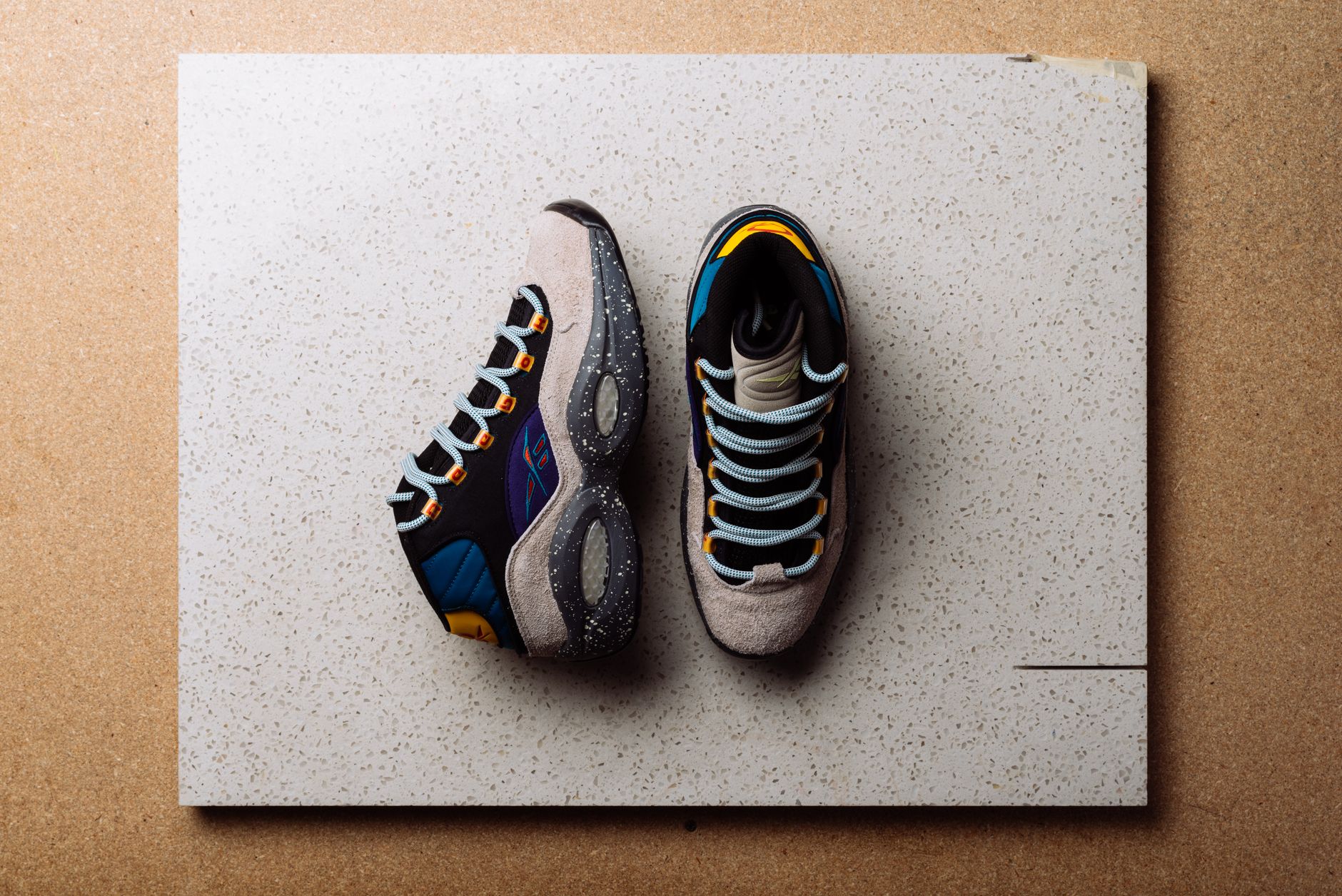
Statement sneakers are the shoes that are the most interesting thing in the outfit. A rare colorway, a distinctive silhouette, a bold color — these shoes ask for the rest of the outfit to give them room to exist. The outfit builds around the shoe rather than the shoe completing the outfit.
Understanding which category your shoe falls into before you build the outfit is the starting point for everything else.
Color Matching: The Rules That Actually Work
Color theory in fashion is often presented as more complicated than it needs to be. Here is the practical framework that covers the vast majority of cases.
Rule One: Pick Up a Color
The simplest and most reliable color matching approach is to find a color in the sneaker and repeat or reference it somewhere in the outfit. This creates visual cohesion without requiring you to match everything precisely.
The pickup does not have to be an exact match — it needs to be clearly related. If your sneaker has a burgundy accent, wearing any burgundy element in the outfit creates a connection. A burgundy hoodie is an obvious pickup. A burgundy graphic element in a tee is a subtler one. Both work.
The pickup rule works with:
- Accent laces matching a color elsewhere in the fit
- Midsole color matching a layer
- Upper material color connecting to outerwear
- Brand logos or hits matching accessories
Rule Two: Neutral Shoes, Free Color Above
If you are wearing neutral sneakers — all white, all black, all grey, or all-white with minimal accents — the rest of your outfit can do whatever it wants in terms of color. The neutral shoe is not constraining anything.
This is why the all-white Air Force 1 and the all-black Chuck Taylor have been wardrobe staples for decades — they remove the shoe from the color equation entirely, which simplifies every outfit construction decision you make from there.
Rule Three: Statement Shoes, Neutral Above
Conversely, if you are wearing a statement sneaker — a bold colorway, a distinctive silhouette, a limited collab — the rest of the outfit should give the shoe room. Neutral tones and clean silhouettes above a statement shoe let the shoe be the focus. Busy colors and bold graphics competing with a statement sneaker creates visual noise.
This is the most commonly violated rule in beginner outfit construction. People buy an exciting sneaker and then pair it with an exciting top and wonder why the overall fit does not quite work. The sneaker needs space.
Rule Four: Monochrome Outfits and Sneakers
In a monochrome outfit, the sneaker is either fully within the color story (same color family) or a deliberate accent point. There is no middle ground. A white sneaker in an all-black outfit is a deliberate accent. A black sneaker in an all-black outfit extends the monochrome. Both work. A colored sneaker in an all-black outfit works only if you have a clear reason for the introduction of that color.
For the full breakdown on monochrome outfit construction, our monochrome streetwear outfit ideas guide covers color and texture coordination in depth.

Silhouette Matching: How the Shoe Shape Affects the Outfit
Color is only half of the sneaker matching equation. The silhouette of the shoe — its profile, height, bulk, and overall visual weight — is equally important and often less intuitive for beginners.
Low Profile vs. Chunky Runners
The two dominant sneaker silhouettes in current streetwear — the low-profile court shoe (Air Force 1, Dunk, Samba, etc.) and the chunky running silhouette (New Balance 990 series, Asics Gel-Kayano, Nike Air Max) — work differently with different outfit proportions.
Low-profile court shoes have a clean, flat profile that reads more refined and works across a wide range of outfit silhouettes. They are neutral in terms of visual weight, which makes them versatile. They tend to work better with cleaner, less voluminous outfits — the shoe is understated enough that it needs the outfit to bring some presence.
Chunky running silhouettes add visual weight at the foot that needs to be balanced above. They work best with outfits that have volume — wide-leg trousers, oversized hoodies, generous silhouettes — because the volume above balances the visual weight of the chunky sole. A chunky running shoe with slim trousers creates a top-heavy silhouette that reads awkward.
Silhouette and Trouser Break
The "break" — how the trouser hem meets the sneaker — is one of the most critical styling details in any sneaker outfit and one of the most overlooked.
No break (cropped at the ankle): Works with almost any sneaker silhouette because the relationship between trouser and shoe is clean and unambiguous. The shoe is fully visible, the trouser is fully visible, nothing is being obscured.
Slight break (hem just touching the top of the sneaker): The most common and versatile option. Creates a natural relationship between trouser and sneaker without obscuring either.
Heavy break (hem stacking on the sneaker): Works specifically with certain silhouettes — straight-leg denim with clean low-profile sneakers, or wide-leg trousers with any sneaker — and reads as very intentional. It does not work with all trouser and sneaker combinations.
The wrong relationship: A hem that hits halfway up the sneaker body, obscuring the midsole in an unintentional way — this reads as poor fit management rather than a styling choice.
| Sneaker Type | Trouser Silhouette That Works | Break | |-------------|------------------------------|-------| | Low-profile court shoe | Straight-leg, wide-leg, cropped | Slight to none | | Chunky runner | Wide-leg, relaxed straight | Slight to heavy | | High-top basketball | Cropped or tucked-in | None — the shoe needs to be visible | | Platform sneaker | Wide-leg, midi-length | Heavy break or tucked | | Trail/outdoor crossover | Cargo pants, technical trousers | Slight |
Building Your Sneaker Foundation Collection
Before you can match sneakers well, you need the right sneakers. Here is the framework for building a collection that covers the maximum number of outfit situations without the maximum number of shoes.
Start With Two Neutrals
Every collection should begin with two neutral anchors. For the best options at accessible price points, our best sneakers under $100 guide covers Nike Dunks, adidas Sambas, and New Balance 574s ranked by comfort, style, and value — and our Nike Dunk Low best colorways guide narrows it down to the Dunk specifically if that is your silhouette of choice.
-
All-white or predominantly-white clean court shoe — the Air Force 1 Low, the Nike Dunk Low in a clean colorway, the Adidas Stan Smith, or the New Balance 550 in a white/cream execution. This shoe works with everything and you do not have to think about it.
-
All-black or predominantly-black shoe — the black Chuck Taylor, the black Air Force 1, the black New Balance in your preferred silhouette. Same principle: it removes the matching calculation entirely.
These two shoes handle 70% of your casual outfit needs. Everything else you add to the collection is additional range, not replacement.
Add One Statement Piece
Once you have the neutral foundation, add one shoe that has genuine personality — a colorway you are excited about, a silhouette that you love, a collab that you actually copped for the right reasons. This shoe becomes a focal point that specific outfits are built around.
The key is buying this shoe because you genuinely love it, not because you think you should have it. The best statement sneakers in a collection are the ones you actually want to wear, not the ones you felt obligated to get.
For what is worth copping this month specifically, our top sneaker drops guide for March 2026 covers the full current landscape.
Layer in Silhouette Range
Once you have neutrals and a statement piece, the next additions should bring silhouette variety rather than just color variety. If you only have low-profile court shoes, add a chunky runner. If you only have casual shoes, consider one shoe that crosses into more elevated territory. The goal is that your sneaker collection does not narrow the outfit types you can build — it expands them.
Common Beginner Mistakes and How to Avoid Them
Matching sneaker to one element and ignoring everything else. Picking up the blue in your shirt with blue sneakers while the rest of the outfit is in completely different tones creates an isolated connection rather than a cohesive outfit. The pickup needs to work within the overall color story.
Wearing statement shoes with statement outfits. As covered above: statement shoes need space. If you are wearing a loud sneaker, the rest of the outfit needs to give it room. Two statement elements fighting for attention is not an outfit, it is a conflict.
Wearing athletic shoes in formal contexts without intention. Athletic sneakers at elevated occasions work when they are clearly part of a deliberate cross-register move — an otherwise formal outfit with a specific sneaker inserted for contrast. They do not work when they are just the most comfortable shoes you own worn with a suit.
Ignoring condition. A dirty, scuffed sneaker undermines any outfit regardless of how right the matching logic is. Sneaker care — wiping down creases, cleaning midsoles, treating uppers — is part of the styling equation. A mediocre sneaker in excellent condition is often a better choice than a premium sneaker in poor condition.
Too much matching. Matching the sneaker to the shirt, the shirt to the pants, the pants to the bag, everything connecting to everything — this reads as over-considered and forced. The best outfits have some tension between elements. Leave some room for pieces to just be themselves rather than tying everything into one continuous loop.
Specific Outfit Formulas With Sneaker Guidance
The Basics Done Right
- White tee + grey straight-leg denim + white or clean Air Force 1 / Nike Dunk Low
- The sneaker is completing the clean simplicity of the outfit — nothing more complex is needed
Graphic Tee Elevated
- Bold graphic tee + black wide-leg cargo pants + clean black low-profile sneaker
- The black sneaker stays out of the way of the graphic, the cargo adds weight at the bottom to balance the visual energy of the tee
Technical Layers
- Quarter-zip technical fleece + cargo pants + trail-inspired sneaker (Salomon XT-6, Asics trail)
- The trail reference in the sneaker completes the technical aesthetic without being literal outdoor wear
Earth Tone Stack
- Cream hoodie + tan cargo pants + brown suede New Balance or similar earth-tone runner
- The earth tone sneaker extends the palette rather than punctuating it with contrast
Statement Shoe Focus
- White tee + grey relaxed straight trousers + bold colorway statement sneaker
- Everything above the waist is neutral, the shoe is the entire point
For how these formulas connect to the current trends landscape, the spring streetwear trends guide for 2026 covers what silhouettes and palettes are doing right now, and the best new streetwear brands guide covers where to find footwear from emerging brands doing interesting work.
Hypebeast's sneaker section and Highsnobiety's footwear coverage are the most reliable ongoing resources for staying current with releases and styling.
The Practice Component
Like all styling skills, sneaker matching improves with deliberate practice. The most useful exercise: before leaving the house, spend 30 seconds consciously identifying which role your sneaker is playing (neutral, accent, statement) and checking that the rest of the outfit is serving that role correctly. This is not about overthinking — it is about building pattern recognition until the evaluation happens automatically.
After a few weeks of this conscious practice, you will find that you are making these evaluations automatically and your fits are consistently better for it.
Shop Our Collection
The right tees, hoodies, and basics are the canvas your sneakers work against. Browse the Wear2AM shop for pieces designed to play well with every sneaker in your rotation. Free shipping on orders over $75.
Shop this guide
Nike Air Force 1
Nike
All-white Air Force 1 are neutral sneakers that form a flexible foundation for any outfit.
BUY ON AMAZON →RELATED READS

Crew Sock Styling Rules Ranked for 2026
A ranked rulebook for when and how to showcase crew socks in 2026 — visibility thresholds, sneaker pairings, pant cuts, and two reliable multipack picks.

Get the Kayano 14 Look for $25 Less with the ASICS Gel‑1130
Get the Y2K Kayano 14 look for $25 less with the ASICS Gel‑1130 — colorway picks, fit tricks, and styling moves that close the gap.

5 Fresh Ways to Wear the Nike Cortez Instead of the Adidas Samba
Five concrete fit formulas that let the Nike Cortez stand in for the Adidas Samba, from minimalist monochrome to tailored-casual, for 2026 streetwear.